Select Videos of Performances at Queen’s Prize 2019

Videos courtesy of Mathurin Kebusso

(Apologies to Elaisse de Garrigues; the video of your performance was lost)

These are clips of the complete performances.

Da’ud ibn al-Kabsh al-Garnati al- Mai’ez, called Maaz, “A hakawati style reading of stories and histories of Abd al-Rahman I”


Melanie de la Tour, “Musical Performance (voice and mandolin) of a John Dowland song, Awake Sweet Love


Pádraigín an Ein i gh, “The Foulest Place of Mine Arse is Fairer Than Thine Face: Them’s Fighting Words, A Demonstration in Taboo Language”

PARENTAL WARNING:  This video contains adult language and themes. 


Queen’s Prize Tournament Court Summary, February 9, A.S. 53

In evening court:
Rafe le Mountere – Golden Calon Swan

Other court tidings:
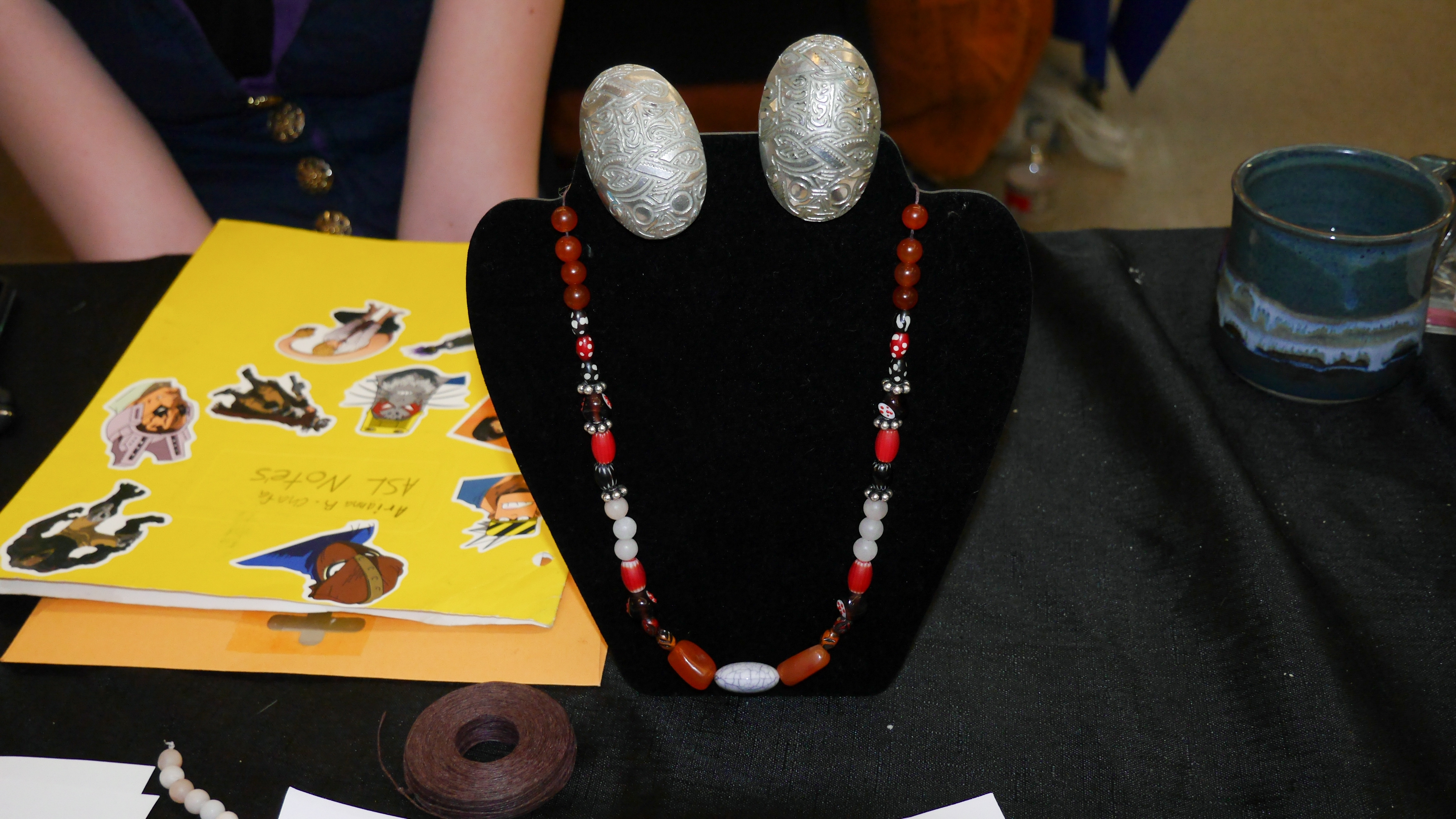
Emma Underfoot, Avalon of the Black Fleet and Scarlet Rose of Oakheart received special mention for their youth entries.
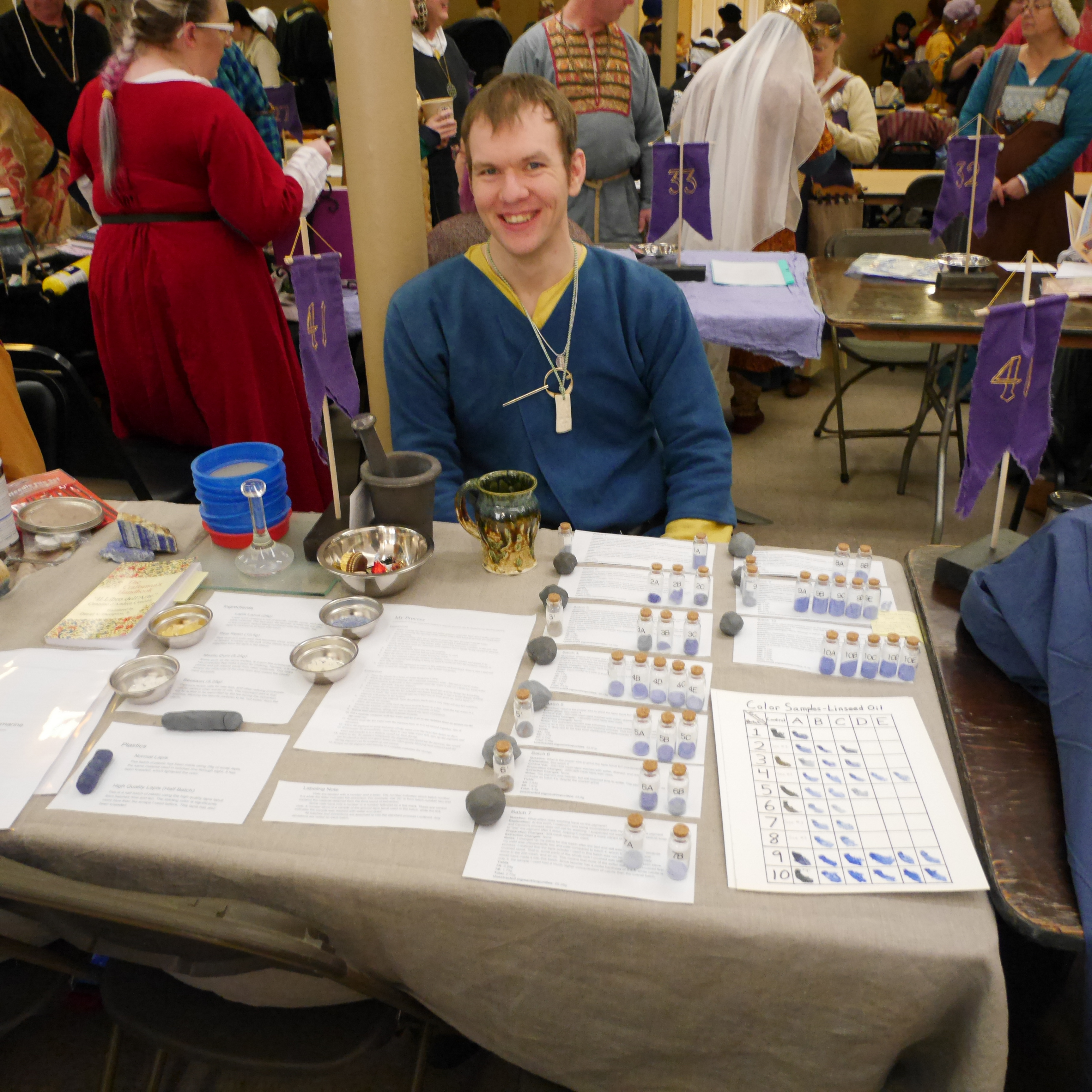
Lord Finán mac Crimthainn received the Judges’ Choice prize.
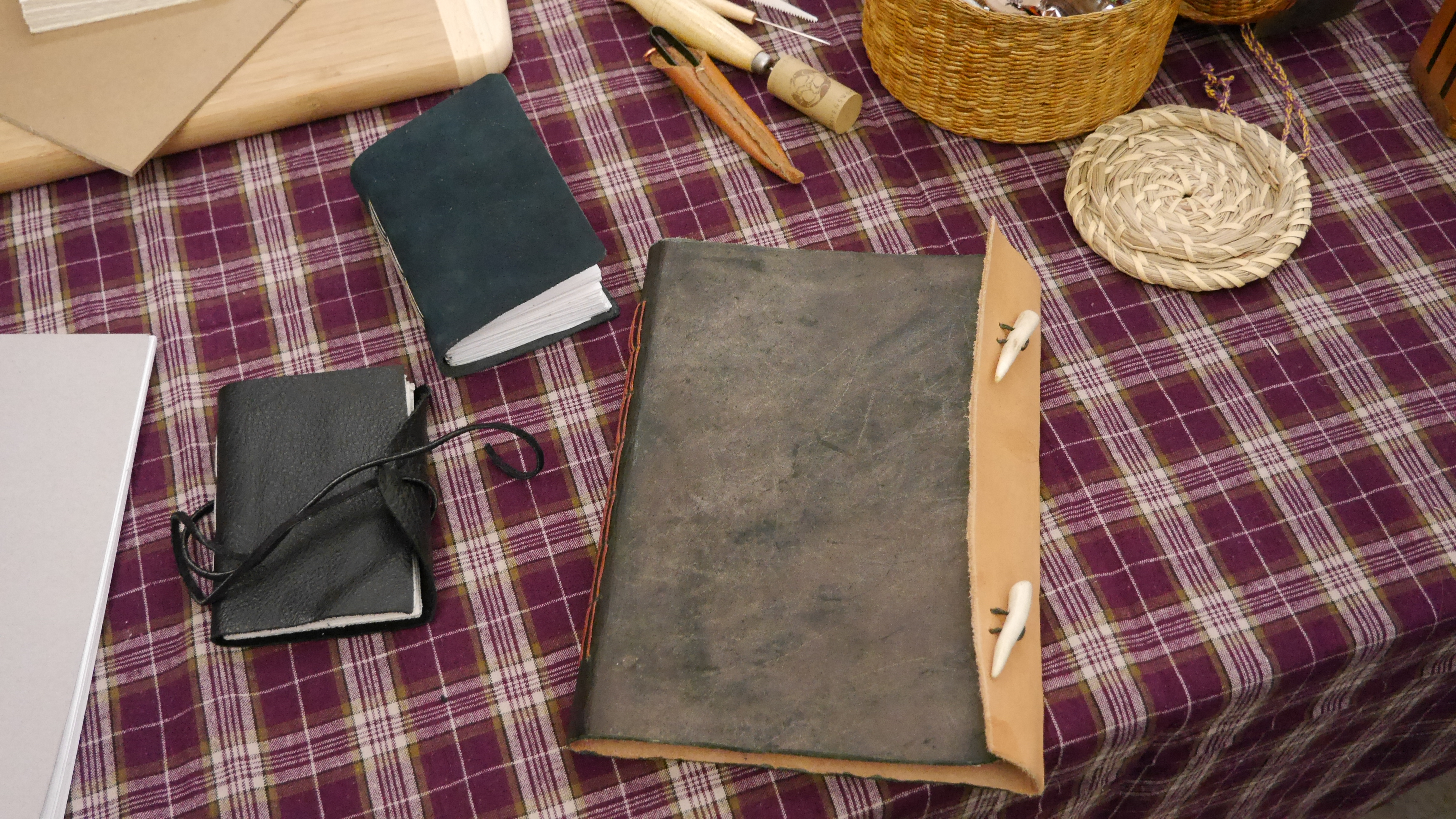
Lady Tessie of Cúm an Iolair (Taraxia de Sousa) received the Populace Choice prize.
2 newcomers received mugs.
CalonCon bids are due by 1 April.
King’s Companie of Archers bids are due by 1 June.
Kingdom A&S will be hosted by the Shire of Oakheart.
Lady Elaisse de Garrigues reminded the populace about the upcoming St. George and the Dragon event, to be held in conjunction with Bardic Bedlam, in May.
HG Isabeau Beaux Yeux swore fealty as Her Majesty’s Thegn.
Letters of intent to become Kingdom Minister of Arts & Science are due by Spring Crown Tourney (13 April). Interviews will be at Unslung Heroes (4 May).
Siora Zaneta Baseggio reminded the populace about the upcoming Knowne Worlde Heraldic and Scribal Symposium in July.
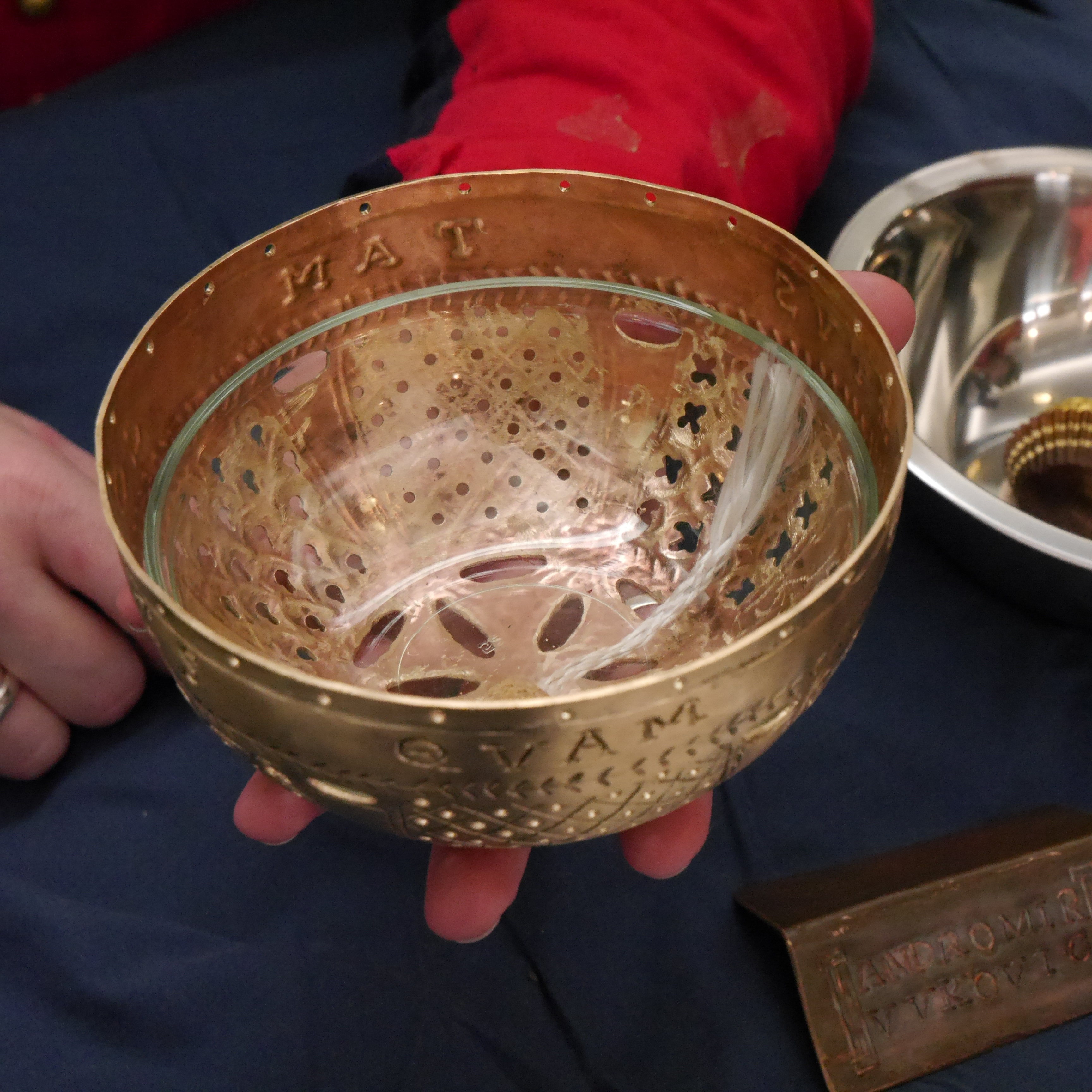
Andromir Vukovic received the Queen’s Prize.

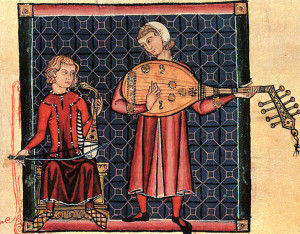
Unknown Artist. Minstrels with a Rebec & a Lute.
13th c. Manasseh Codex. El Escorial, Madrid. Public domain in the US

Nesscia’s Missives: Of Queen’s Prize Tournament

Image from Huntington Library Ms HM 60, f°7, 15th C.

Letter from Home
February 10, AS LIII
Being 2019 of the Common Era

My Dear Cristina,

I pray your journey is at an end and this missive finds you again at your estates. I oft desire you to take wing as a bird and fly swiftly home so we may bend the elbow and tell tales of our adventures.

Indeed, I am tardy in setting pen to parchment. Ever do intentions go awry, as my fondest wish would have been to write this missive upon alighting from my wagon and the end of my day’s journey last evening.

With Her Populace readying for war, our Ever Gracious Queen Catalina looked around and understood, seeing tempers flare and worry upon the faces. She called a tournament of Artisans and Bards and Craftsfolk as a necessary diversion to calm hearts!

There gathered in the Shire of Lost Moor some 300 of the folk from around Calontir. Some to enter the Queen’s Tournament, some to judge Her entries, and some to learn and teach.

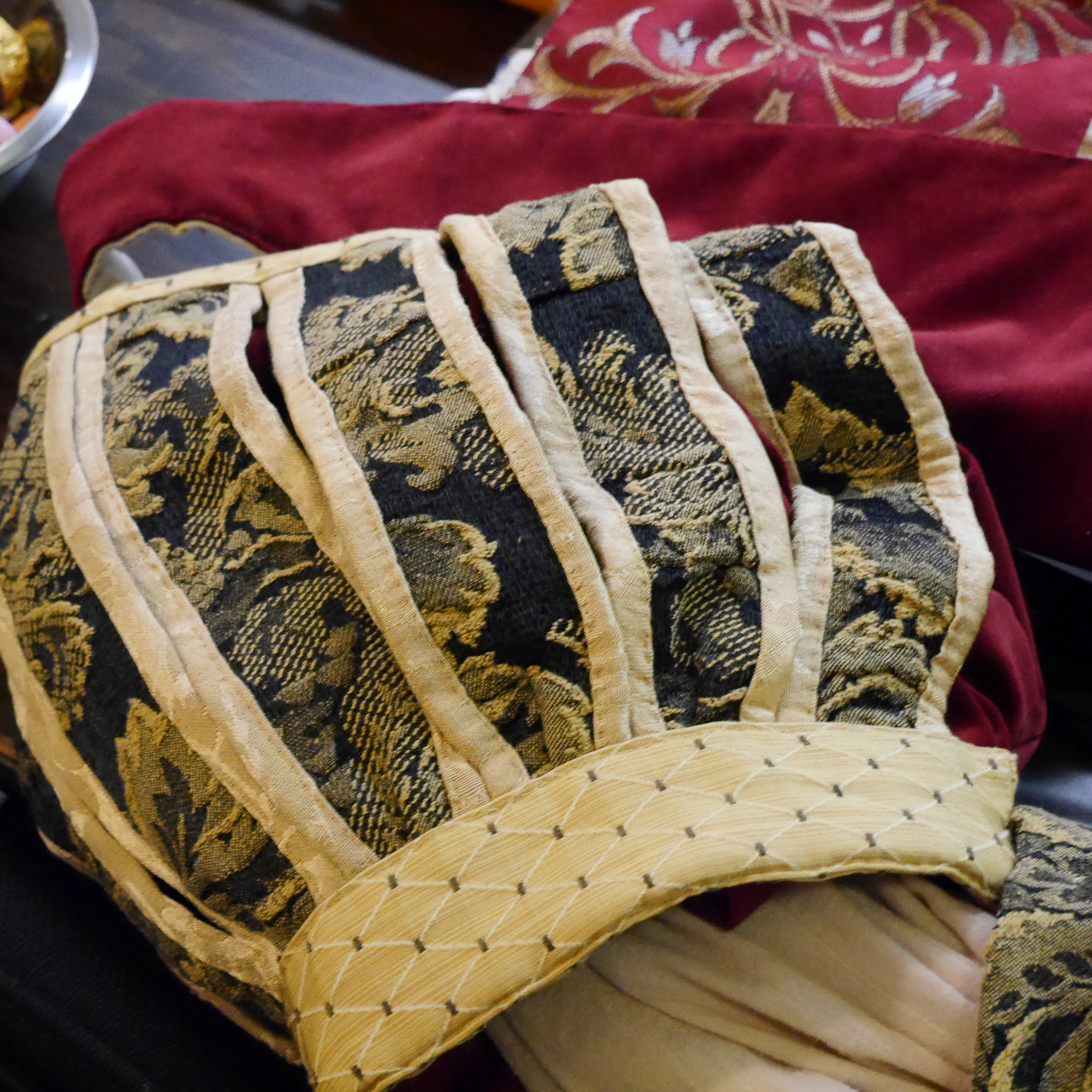
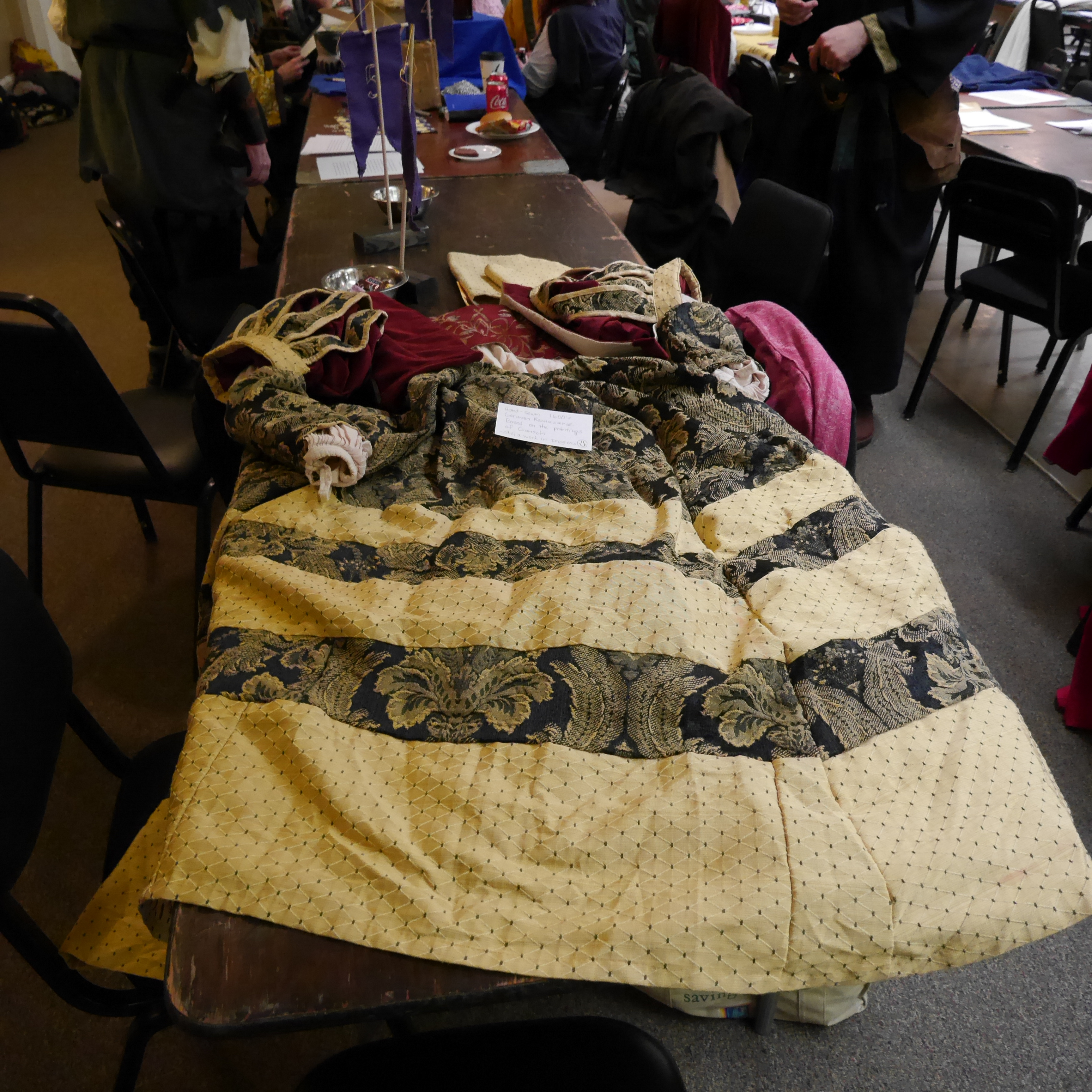
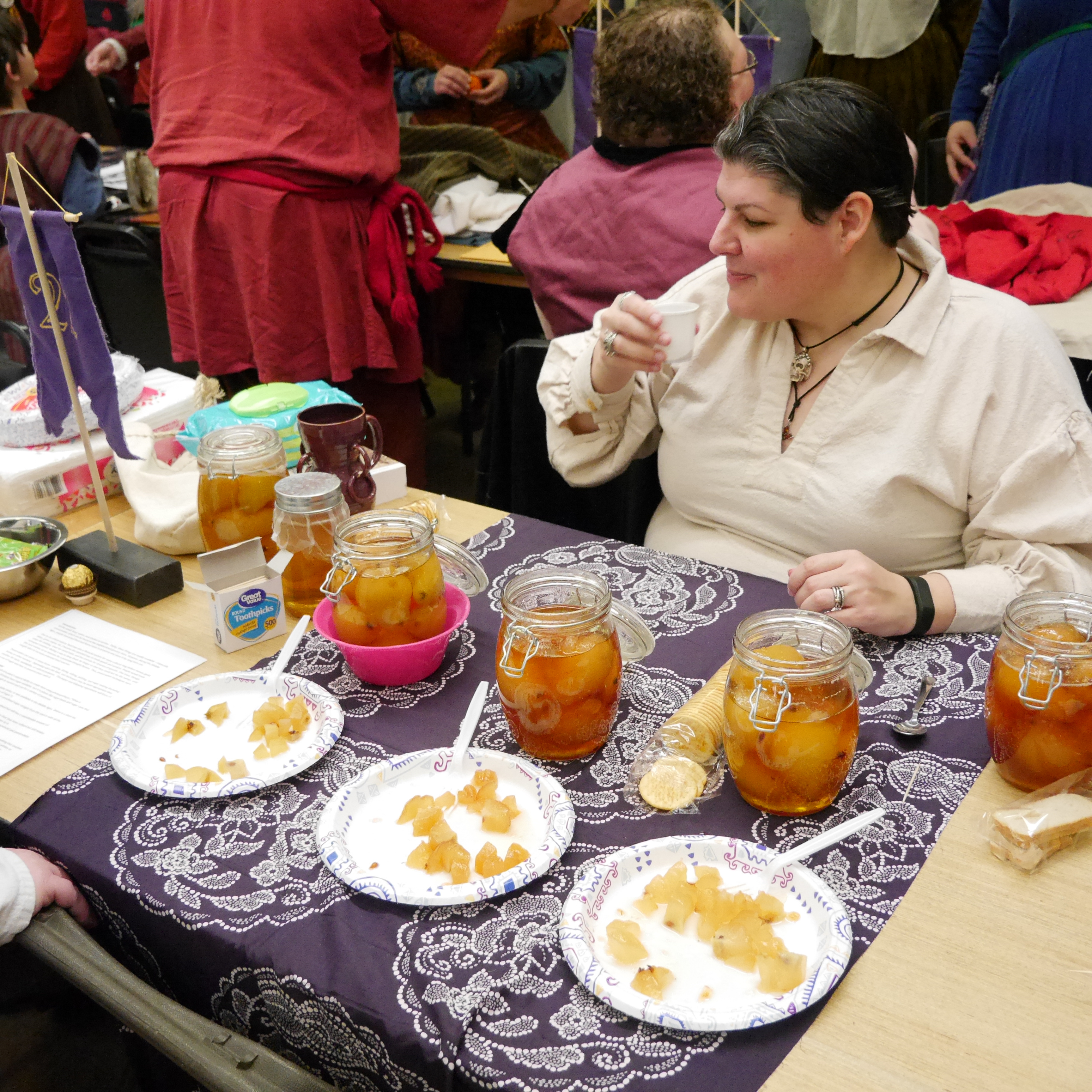
So many innovations and so much skill and such incredible beauty were on display!

Some from our own Barony of the Lonely Tower brought their crafts as well. Mine own brother William Radulfus, who paints so skillfully, brought his game boards. I made the hand signs for him throughout the day so he could understand the spoken word. Also Wulfþryð Maynes displayed a lovely hand sewn tunic she made for another. And Zafara Baabur learned wonderful needle work from the lands of Armenian and Croatia and showed her talent.

Their Most Royal Majesties went through the rooms seeing every craft put on view. Her Majesty spoke with every entrant, listening intently, and providing a gift for each from Her Own Hand.

At the end of the day, Their Majesties held Court so each participant could be recognized and given a token of appreciation.

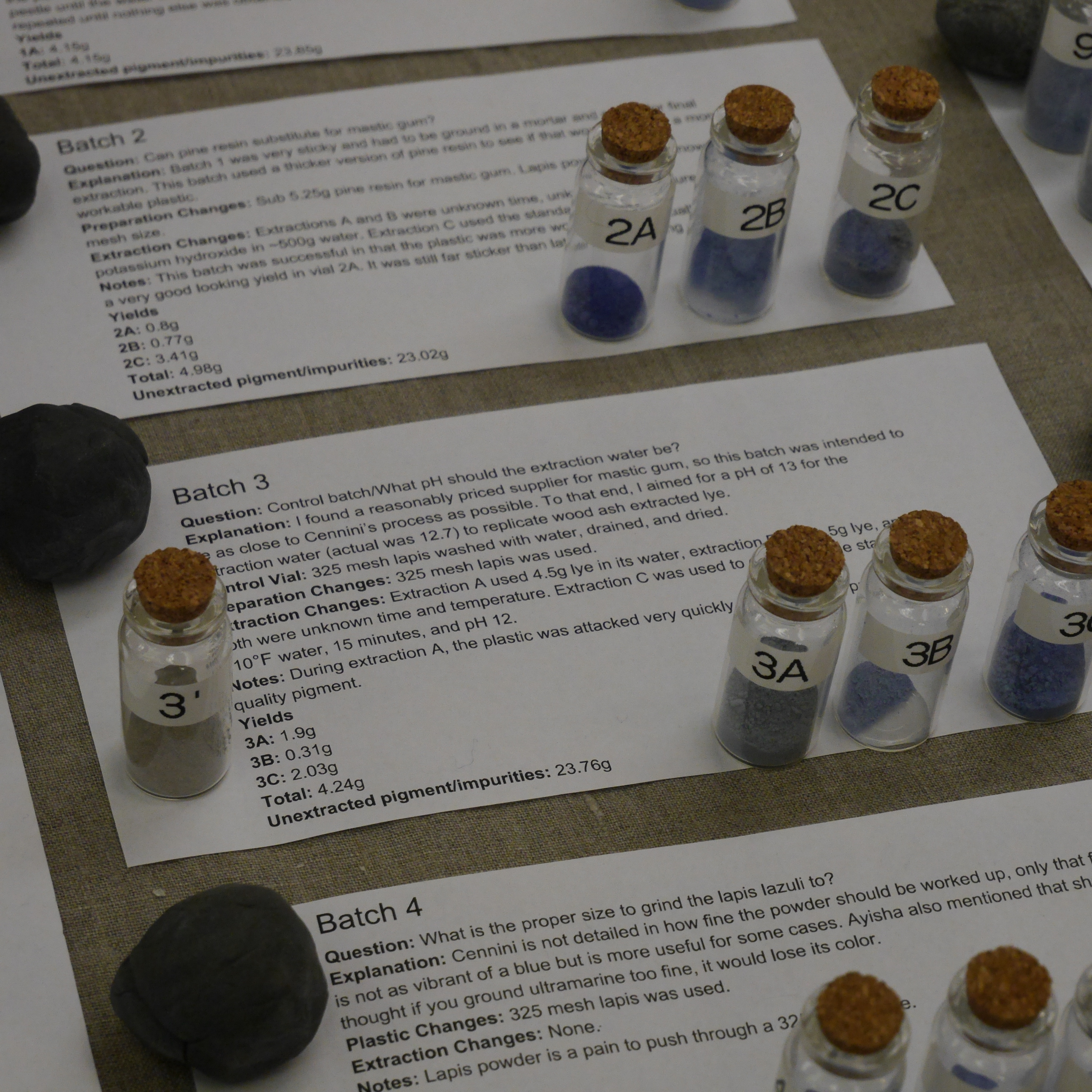
Special recognition was given to Finán Mac Crimthainn by the judges. He made a wondrous blue pigment for the scribes to use. He made it from rock!

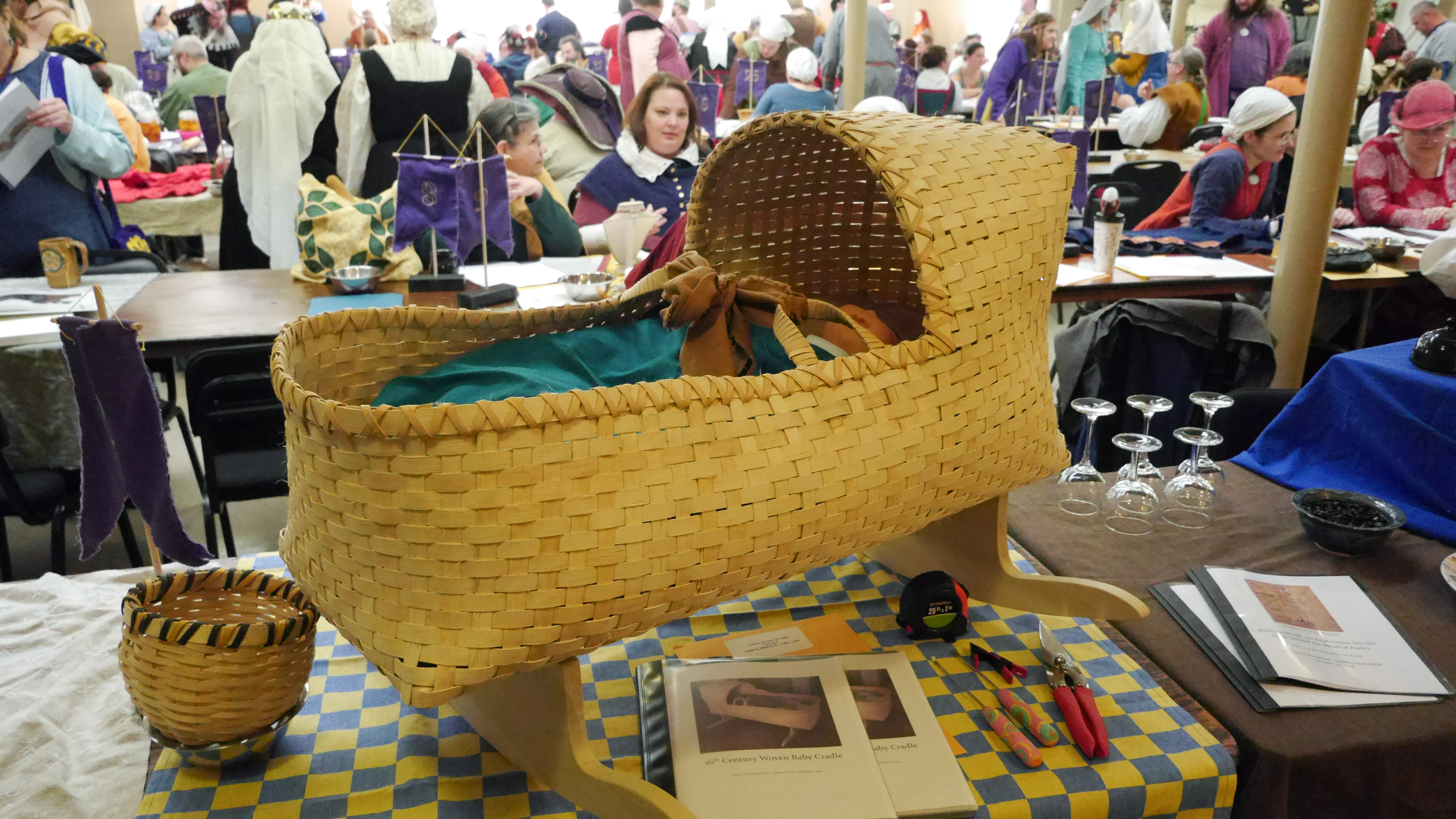
The populace at large gave special recognition to Tessie of Cum on Iolair for a wee babys cradle she wove from wooden strips. Her babes are truly fortunate to have such a talented mother.
And the Queen herself recognized Andromir Vukovic for learning the ancient way of making a Byzantine lamp to bring light to the darkness of night.

You know well the simplicity of the clothing I make. Yet, ever am I pleased with the results, and brought the garb I recently completed for our good friend Astrid Esbjornsdotter. I shall have to see the priest and confess my sin of pride, for many of our countryfolk mentioned the quality of my workmanship.

The day was long and cold. I departed my estates ere the sun rose with my breath cloudy in the air. When I returned t’was after the sun had set and my breath still clouded the air.

I know not if it was from the evil passed hand to hand when the populace gathers or if it is from the broth from the inn or all the delicacies I tasted throughout the day or mayhaps a misalignment of the stars. During my drive home, I could feel my humors were off. By the time I arrived back to my home, I took to my bed straight away. Upon arising this morn I am little better, though I pray my humors are balanced again soonest.

Nonetheless, glad I am knowing of our visit this coming week, and I trust you are settling well back at your estates.

Until the appointed time, I remain ever your friend,

Nesscia

Scandinavian Time Measurement During the Viking Era

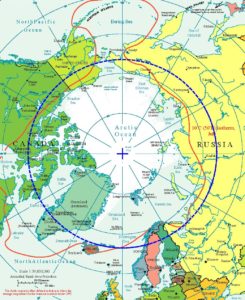
The Scandinavians lived in and colonized places so far north that the time measuring conventions of continental Europe were inadequate. Not only were the days of winter so much shorter than they were further south, the sun barely rose above the horizon, with a track that arched only slightly higher at noon than it did during the rest of the day.

In the rest of Europe, the day was divided into 12 hours of daylight and 12 hours of nighttime. The length of these “hours” varied depending on the time of year. Only on the equinoxes was an hour of daylight 60 minutes long. In other words, on the summer solstice, in Rome an hour of daylight was 76 minutes long using our modern measurements, and an hour of nighttime was 44 minutes long.
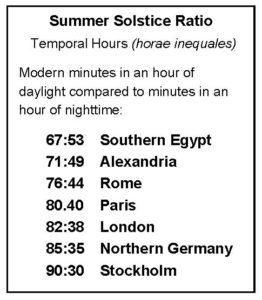
The further north you travel, the longer each hour of daylight becomes. By dividing the hours of daylight into 12 unequal hours, on the summer solstice you end up with a ratio 80 minutes per hour of daylight to 40 minutes per hour of nighttime in Paris, 85 minutes of daylight to 35 minutes of nighttime in northern Germany, 90 minutes of daylight to 30 minutes of nighttime in Stockholm, and 105 minutes of daylight to 15 minutes of nighttime in Reykjavik, Iceland. The reverse was true in the winter, when a daytime hour would measure 30 minutes long in Stockholm and only 15 minutes long in Reykjavik. Clearly the 12-hour convention of southern Europe works poorly in lands nearing the Arctic Circle.
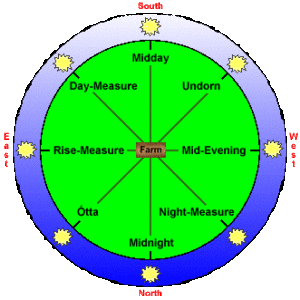
Instead the Scandinavians divided the day into eight equal parts. In the winter the sun would still be below the horizon for much of the day, but “daymarks” (dagmarks) could be measured even during the shortest days of the year. That’s because daymarks relied on the direction of the sun. The Scandinavian system divided the horizon into eight sections by direction (north, northeast, east, southeast, south, southwest, west and northwest).

Of course the most important daymark each day was noon, when the sun was at its zenith. Known as “Highday” or “Midday” (hádegi or middag), it was the mid-point in the sun’s path across the sky. Unlike the geographic locations of sunrise and sunset, which moved significantly during the year, at midday the sun was in the same place every day.

Equinoctal View of the South Horizon from a Scandinavian Farm

Most Scandinavians used a landmark to identify midday, or highday. There are numerous mountains in Norway named Middagsfjället, Middagshorn and Middagsberg, for example, and in Iceland, Hádegisbrekkur (for highday). Other geographic features used to mark midday were mountain passes, bridges, and fields.

Opposite midday was midnight (miðnætti). In latitudes approaching the Arctic Circle it is easy to establish a landmark for midnight by watching the horizon during June. Although the sun has set before midnight, it is so close to the horizon that the twilight is often bright enough to note where the sun is beneath the horizon. When the sun reaches its lowest point, it is midnight. And of course, at midnight the sun is due north, just as it is due South at noon.

Summer View of the North Horizon from a Scandinavian Farm

Half-way between midnight and midday was mid-morning or rise-measure. This is when the sun is due east. On the equinoxes the sun would rise at this point on the horizon. During the summer the sun would rise long before the nighttime sleep period was over, and during the winter people would wake up long before the sun rose. The sun would rise closer to the midnight marker in the summer and closer to the midday marker in the winter, but the geographic marker for mid-morning would be some feature due east, such as a tree, a valley or another mountain peak. Likewise the point half-way between noon and midnight, mid-evening, was located due west.

Winter View of the South Horizon from a Scandinavian Farm

In between these four cardinal points of the compass were four more geographic markers for times of the day. Between midnight and mid-morning was ótta, roughly 3 am, and between mid-morning and midday was day-measure, about 9 am. After noon was undorn, about 3 pm. And at about 9 pm is night-measure. In all eight directions are used to tell the time, a system that makes sense when the sun is in the sky for wildly different amounts of time during the year. The system uses the location of the sun, whether the sun can be seen above the horizon or not, to tell time.

Summer View of the South Horizon from a Scandinavian Farm

In Anglo-Saxon England during the Viking era, they used a system similar to that of the Scandinavians in that there were eight “tides” to the day. But contact with the Roman Catholic Church and European culture in general led to differences between the English tides and the Scandinavian átts. The English tides don’t seem to be tied to a geographic direction the way the Scandinavian time-telling system was.

For more information on this topic, check out the web page “Telling Time Without a Clock: Scandinavian Daymarks” written for teachers by staffers at the Harvard-Smithsonian Center for Astrophysics. The page is at http://hea-www.harvard.edu/ECT/Daymarks/#3back. Another good online source is “Time and Travel in Old Norse Society,” a paper published by Thorsteinn Vilhjalmsson of the Science Institute, University of Iceland.

 

Nesscia’s Missives: Of Clothier’s Seminar

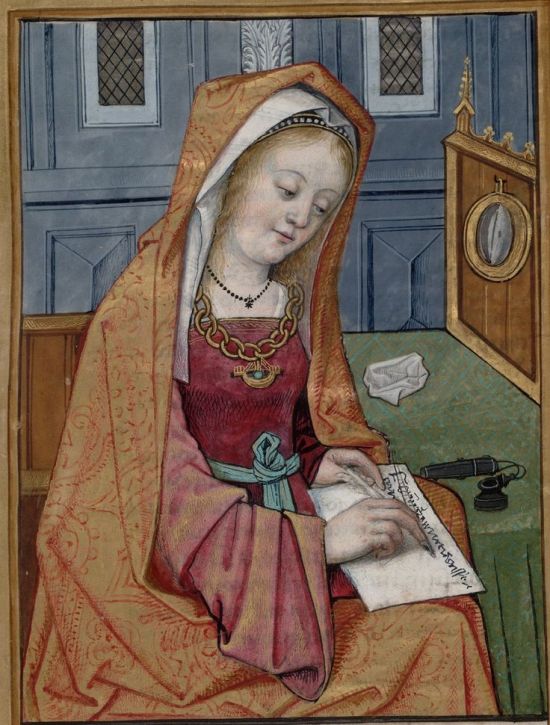
Image from Huntington Library Ms HM 60, f°7, 15th C.

This 2nd day of February AS LIII
Being 2019 of the Common Era

My Dearest Cristina,

Dawn was still a distant thought when I loaded my wagon and drove to our dear friend’s estate this very morn. Baroness Kezia stood ready as I approached, and knowing our long drive ahead, dawdled not while climbing into the wagon.

The excursion south was chill and the mists lay thick upon the lands. I was ever so glad to see the sun as it burned off the haze near the end of our three hour trek.

For this day, a Clothiers gathering occurred just to the south of our own barony, in the Shire of Cum an Iolar. In preparation of the coming war, the populace met to discuss the clothing needs of the soldiers and troop followers and those who hold our lands safe in the King’s absence.

How to stitch clothing to protect against storm and safeguard against chill and defend against weapon were all topics of discussion.

Oft I heard our country folk speak of camping arrangements and supply needs and dividing the burden of war.

Our King Donngal and Queen Catalina walked ever among Their Populace encouraging and planning.

Around mid day the community came together to see the dress of the different peoples whom we may encounter in our travels. The Angles and Ottomans and Franks and Norse and so many other nations will be seen. And not only in our own kingdom along the trade routes, but mainly at the war, great groups will be seen on and off the field of battle. The costuming is a wonder to behold!

As well, displayed for all to learn, were the arms and banner symbols the ever alert heralds know so well. The arms and symbols are oft seen round abouts the fields of battle and at tournaments so all can see who is present or abroad.

Her Excellency Kezia and I, with much regret, departed late afternoon. For the time spent learning and teaching and sharing knowledge was too short. Ever wishing to linger with our country folk, yet knowing we faced the the long drive homeward to our own lands urged us to withdraw. Finding space at the inn when needed at home seemed self-regarding. So we again loaded our few belongings back in the wagon and turned north ere the sun set.

Yet, afore we could arrive to our estates the murk once again enveloped the world. We only knew of the other wagons by the dim outline of the lamps they carried.

After seeing Kezia safe in her abode, the short trip to mine own estate was over long and fraught with danger.

The fogs had swallowed even the road so as to not see beyond the nose of my face. The lamps did no good. And when I finally found my way, I sent my thanks to the gods.

I am now warm and safe and dry. I have consumed a flagon of ale and eaten a hearty supper… all of which has allowed my humors to settle. My good husband, having expected me, had all prepared and ready.

I have now taken pen and parchment and written this missive and am glad to have done so. For I miss you, my friend, when you are absent, and my heart is eager to bring you news of happenings around the kingdom.

I pray that you are well, and look forward to your return and the tales of your adventures in other realms.

With warmest regards,
Nesscia


Clothiers Seminar Court Summary, February 2, A.S. 53

In evening court:
Josephina del Torre – Leather Mallet
Gianetta Antonelli – AoA

Other court tidings:
Lady Rosalie Langmod won the Arts & Science competition at the AoA level.
HL Marguerite des Baux won the Arts & Science competition at the GoA level.
6 newcomers received mugs.
CalonCon bids are due by 1 April.
King’s Companie of Archers bids are due by 1 June.
HL Konstantia Kaloethina received a gift from Their Majesties as thanks for her work encouraging largess.
Ms. Aidan Cocrinn stepped down as Kingdom Arts & Science Minister.
Duchess Issabell St. Charles is the interim Kingdom Minister of Arts & Science.

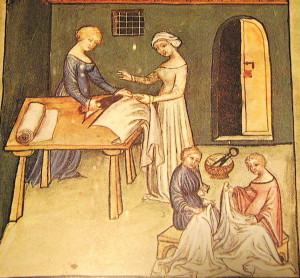
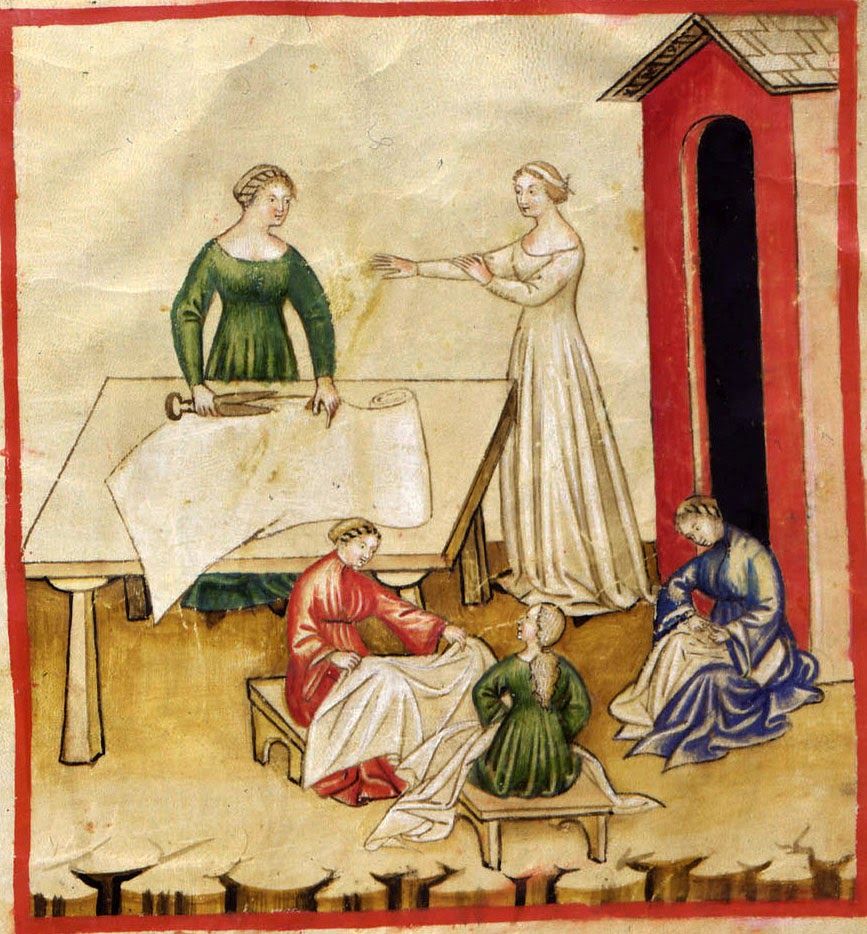
Four women sewing linen clothes. From The Tacuinum Sanitas of Vienna, Late 14th century. Public domain in the US

Clothier’s Seminar Schedule

Greetings!

The schedule of classes for the 2019 Clothiers Seminar is now available at https://shirecai.calontir.org/cs2019/  (scheduled rooms are subject to change, but not class times).

The schedule this year features a Martial Clothing Track organized by Sir Mathieu Chartrain, with classes by Duke Ashir, Mistress Eowyth þa Siðend, Master Jack Banyard, and Sir Mathieu!

We still have space available if you have any heraldic garb for the display at this year’s Clothiers! Please email eventsteward@shirecai.calontir.org to get your heraldic garb on the list for the display! Lady Zarah bat Chesed will make sure your garb gets displayed and returned to you!

If you will be wearing your heraldic garb rather than have it in the display, please consider signing up to participate in the Walk Through History!  You can sign up in advance on the form available through the event web page, or by filling out an information card at the event.

Some instructors will be making their class handouts available on a CD available at the event, and/or at the Clothiers website for a limited time after the event.  Please ask at Gate if you would like a copy of the CD, which we are distributing free of charge.

Many thanks to the many fine instructors who make it possible for us to have Clothiers Seminar!

Yours in Service,

Mèstra Giraude Benet
HL Caitlin nic Raighne
Event Stewards
2019 Clothiers Seminar
eventsteward@shirecai.calontir.org

Winter War Maneuvers Court Summary, January 26, A.S. 53

In morning court:
Murdoch MacLachlan – AoA

Other court tidings:
Gifts were exchanged between Queen Catalina and Queen Gwenhwyfar of Meridies. Meridies gifted a War Drum to Calontir.
CalonCon bids are due by 1 April 2019.
King’s Companie of Archers bids are due by 1 June 2019.
Her Majesty reminded everyone of the Queen’s Guard Tournament to be held at Chieftains.
General Uldin introduced the sergeants for Gulf Wars.

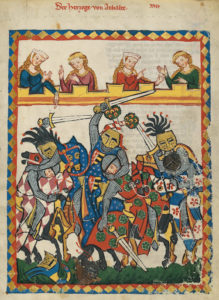
Codex Manesse, UB Heidelberg, Cod. Pal. germ. 848, fol. 17r, “Herzog von Anhalt”, 1305-1315. Public Domain in the United States

Golden Sea Requesting Classes

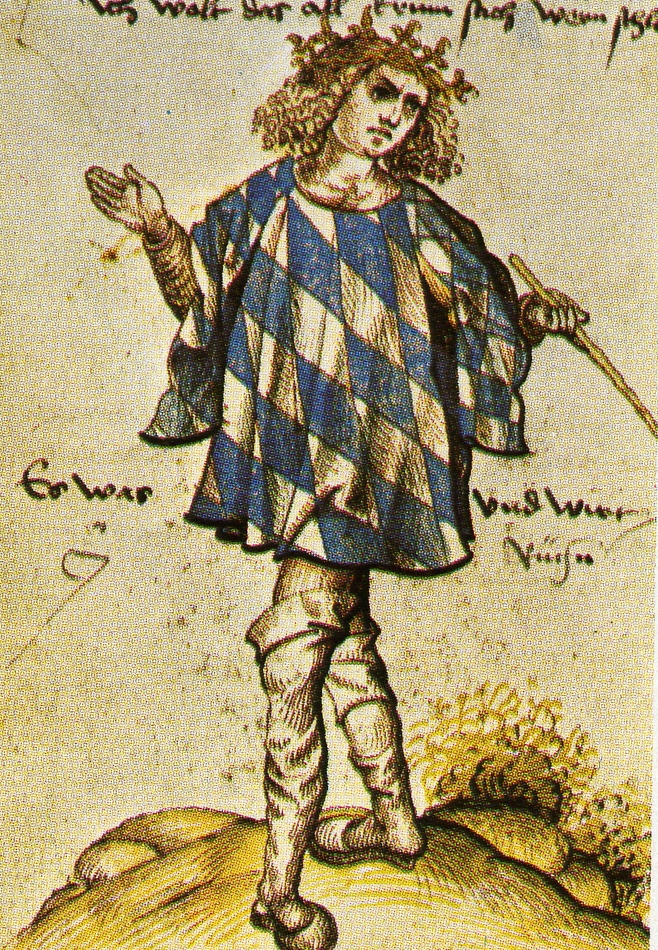
The Bavarian Herald Jörg Rügen around 1510. Public Domain in the US

Gleaned from Facebook:


In an effort to grow in size and A&S ability, the Shire of Golden Sea is looking for those who would be willing to share their skills and knowledge in classes for their populace. They are looking at holding a scheduled A&S class on the 3rd Saturday of each month in the afternoon.

If you or anyone you know would be willing and able to teach a class (or more than one depending on your comfort level), please email the MoAS at Golden.Sea.Moas@gmail.com